Planning booth seating sofas for your restaurant or bar? Compare styles, standard dimensions, fabric options & UK pricing. Bespoke, UK-manufactured. Get a quote.
Best Booth Seating Sofas: A Design, Dimensions & Cost Guide for Restaurants and Bars (2026)
If you’ve ever tried to squeeze more covers into a tight dining room without making it feel cramped, you already understand the appeal of booth seating sofas. They’re one of the few furniture choices that solve a design problem and a commercial one at the same time — which is exactly why so many restaurants, bars, cafés and hotels build their floor plans around them.
This guide covers the practical side of specifying commercial booth seating: the styles available, standard dimensions to plan around, fabric and build considerations, and what booth seating sofas typically cost in the UK — so you can brief your fit-out with confidence.
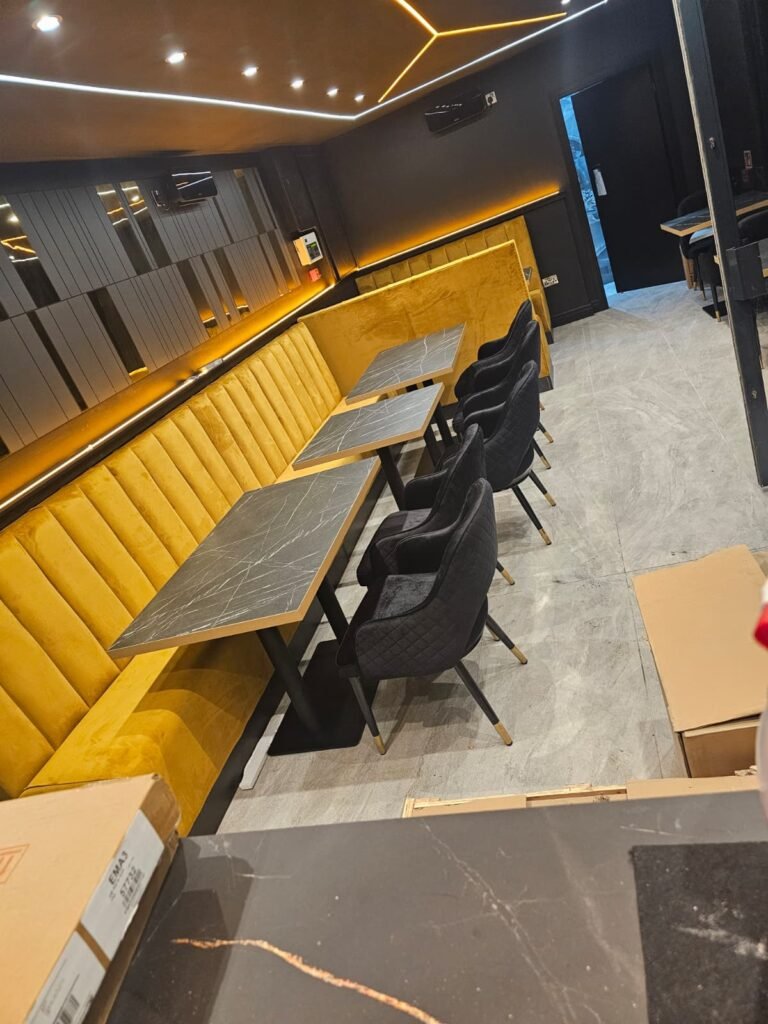
What Counts as Booth Seating?
“Booth seating,” “banquette seating” and “fixed seating” get used almost interchangeably in the hospitality trade, but there are subtle differences worth knowing before you spec a project:
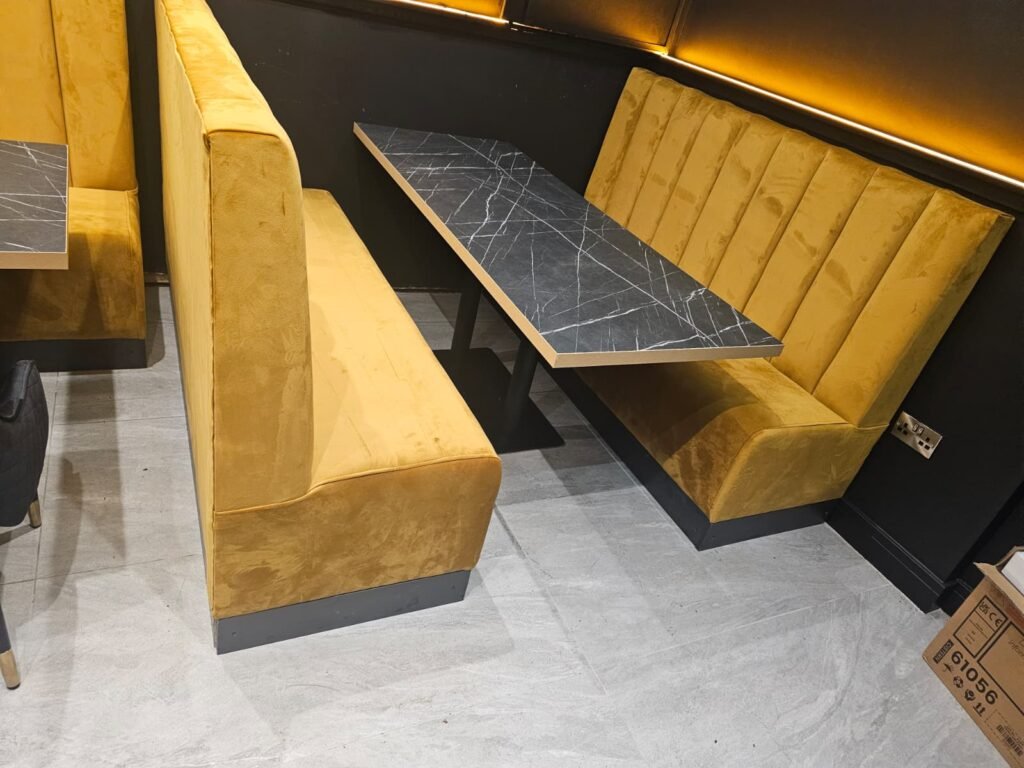
- Booth seating usually refers to a semi-enclosed unit — two facing benches with a table between them, often with high backs or partitions that create a sense of privacy.
- Banquette seating is the upholstered bench itself, which can run along a wall, wrap a corner, or sit inside a booth.
- Fixed seating is the umbrella term for any seating permanently secured to the floor or wall, as opposed to loose furniture.
In practice, most operators use “booth seating sofas” to mean upholstered, banquette-style benches — whether that’s a classic diner-style booth, a wall-mounted run, or a curved island unit in the middle of the room.
Popular Booth Seating Sofa Styles
Straight booths. The standard back-to-back configuration seen in diners, gastropubs and casual dining — efficient, familiar, and easy to repeat along a wall.
Curved and radius booths. Sweeping, semi-circular units that soften a room and work well around bay windows, columns, or circular tables. A strong choice for feature seating near a bar or entrance.
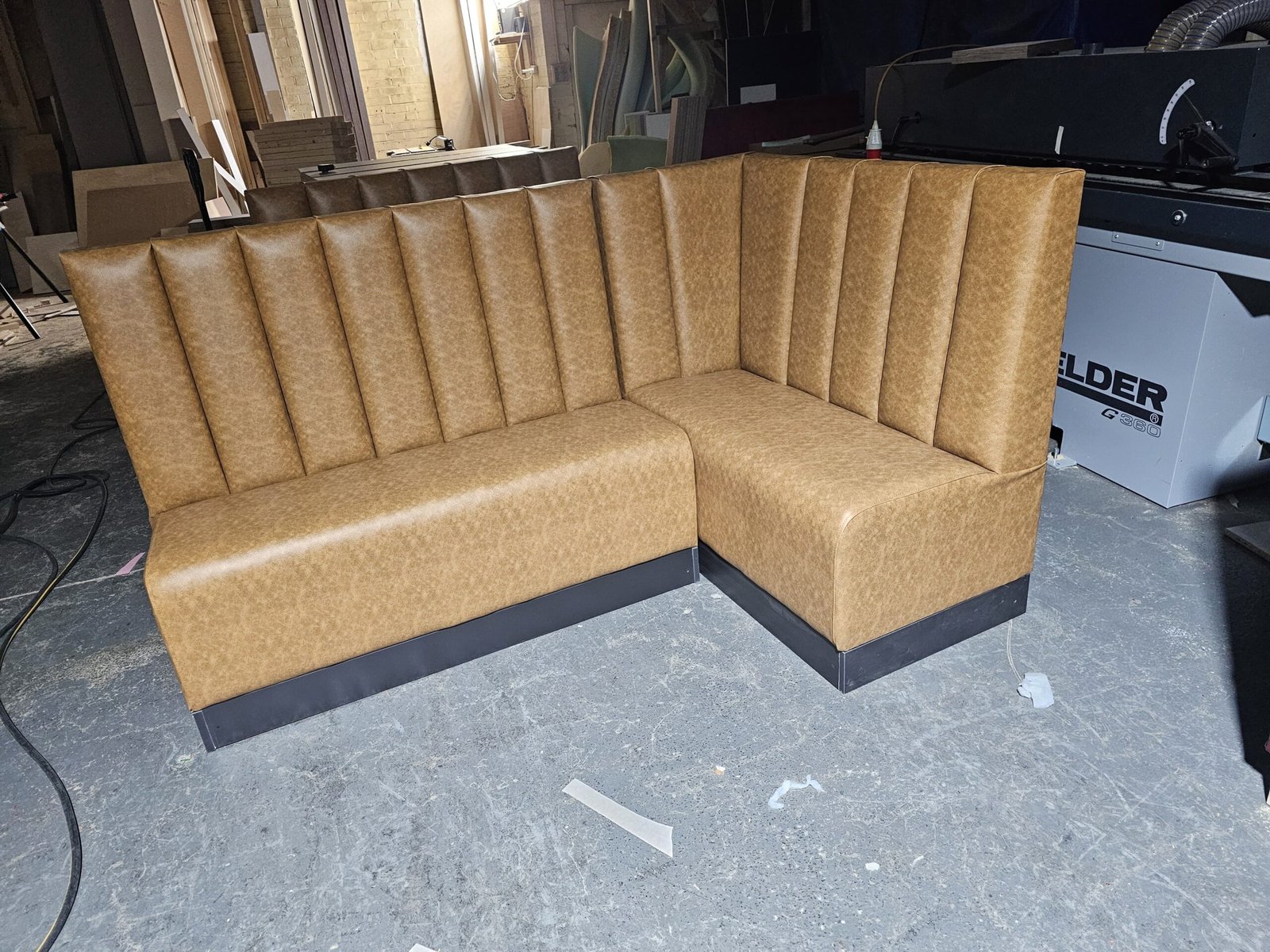
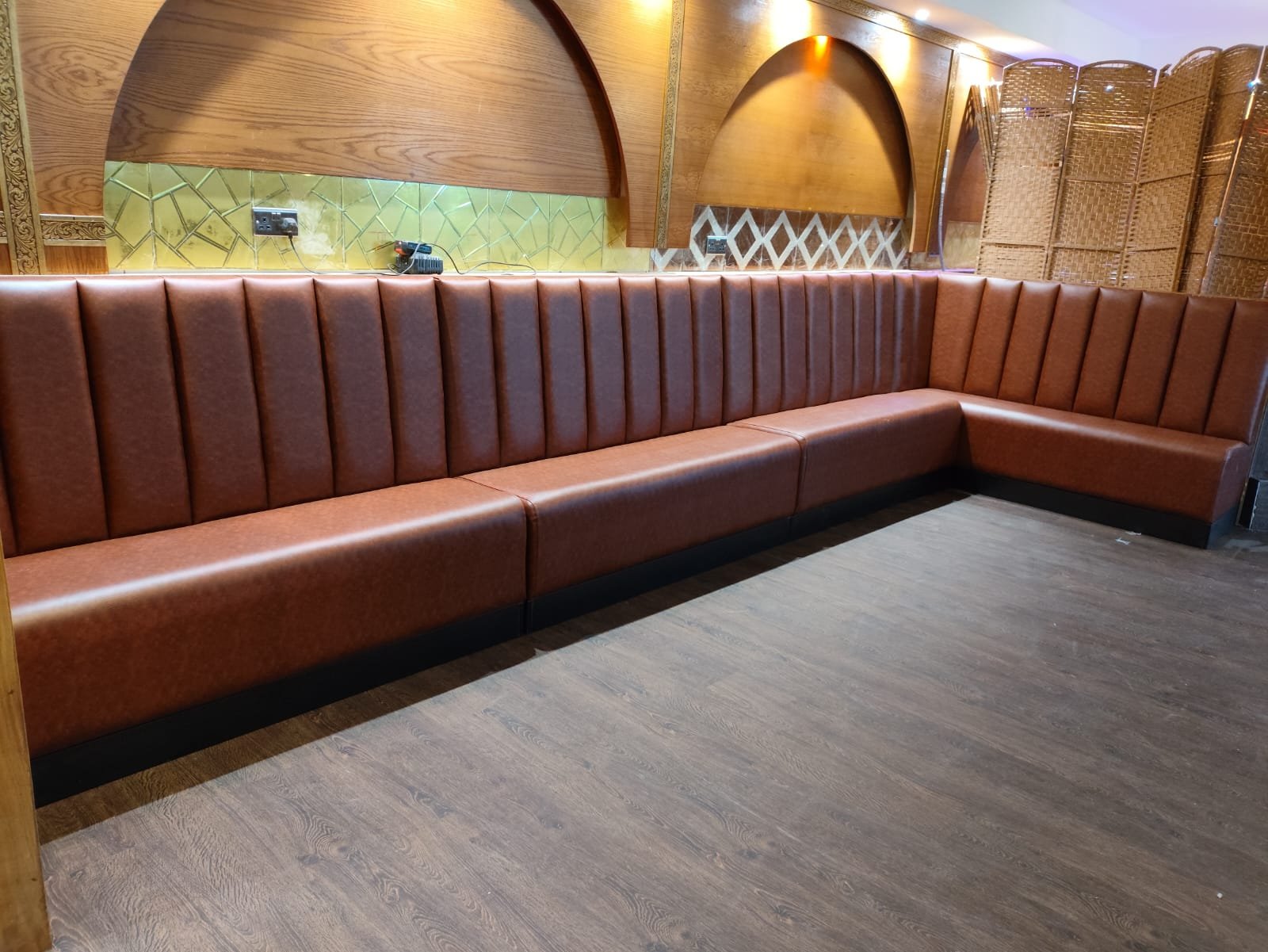
Corner and L-shaped units. Make use of awkward corners that loose furniture struggles to fill, while comfortably seating larger groups.
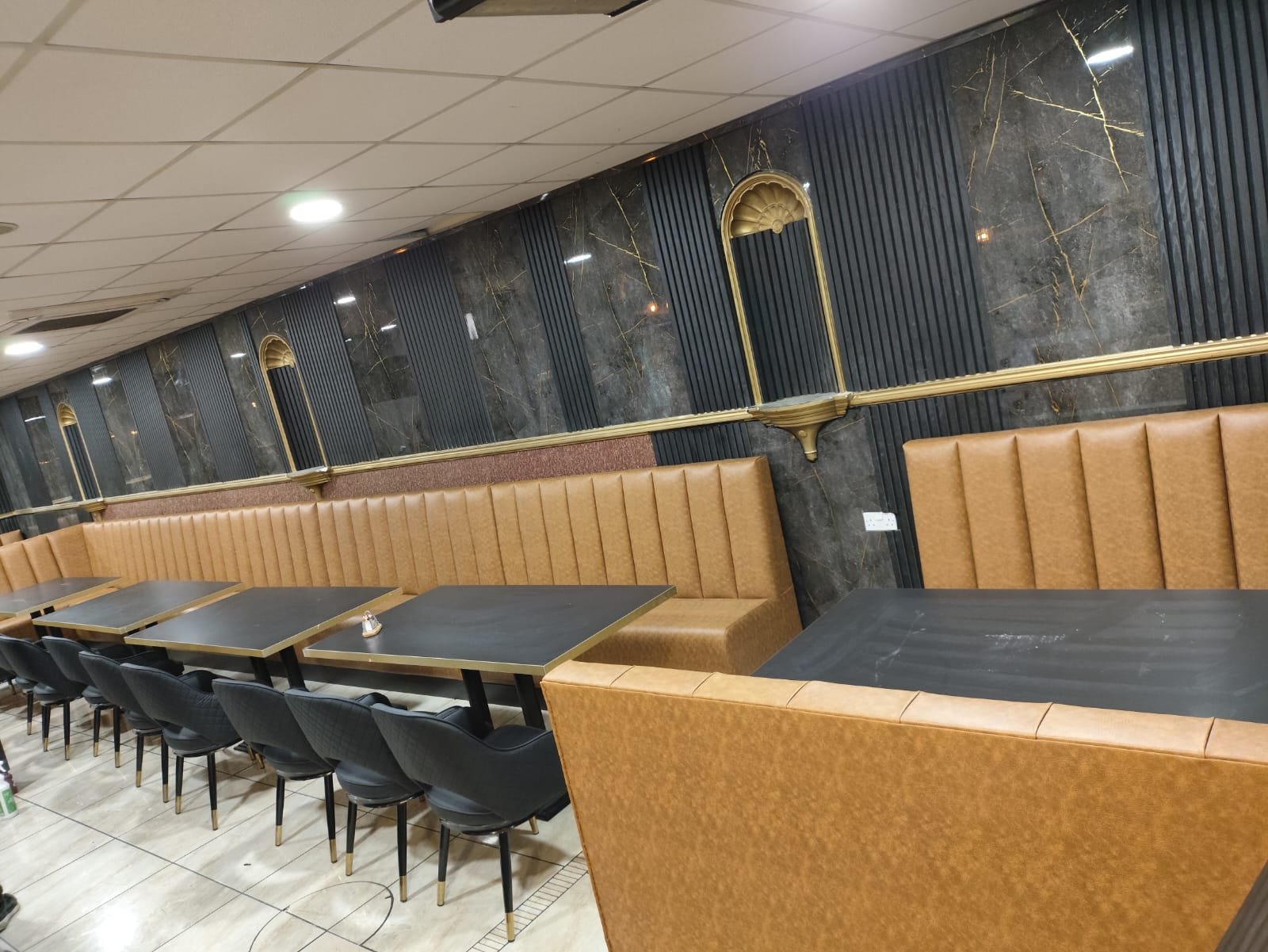
High-back booths. Tall, winged backs create genuine acoustic and visual privacy — popular in cocktail bars and fine dining where atmosphere matters as much as capacity.
Low-back banquettes. Open sightlines across the room, keeping the space feeling social and connected — common in cafés and all-day dining concepts.
Button-back and channel-tufted booths. Detailing like deep buttoning, vertical channelling, or horizontal fluting adds a retro diner or Art Deco character and is fully customisable to your brand’s interior identity.
Standard Booth Seating Dimensions to Plan Around
Every booth we build is made to a bespoke floor plan, but these industry-standard measurements are a useful starting point when you’re roughing out layouts:
| Element | Typical Dimension |
|---|---|
| Seat height | 440–460mm from floor |
| Seat depth | 500–550mm |
| Backrest height (standard) | 900–1000mm |
| Backrest height (high-back) | 1200–1400mm+ |
| Minimum length per diner | 600–650mm |
| Table-to-booth clearance | 300–350mm |
| Aisle width behind booth run | 900mm minimum (accessibility) |
These figures adjust depending on your covers target, accessibility requirements, and whether the booth pairs with a fixed or loose table — which is why bespoke sizing, rather than off-the-shelf units, tends to deliver a better return on floor space.
Materials That Determine How Long a Booth Lasts
Booth seating sofas take more punishment than almost any other piece of furniture in a venue — constant sitting, sliding, spills, and cleaning. A few specification points make the biggest difference to lifespan:
- Frame — solid timber or steel frames hold their shape far longer than particleboard under daily commercial use.
- Foam density — commercial-grade, high-density foam resists sagging for years; budget foam can lose its shape within months.
- Fabric — contract-grade, fire-rated fabric (Crib 5 in the UK) with a high Martindale rub count stands up to abrasion and repeated cleaning. Vinyl and faux leather are popular for easy wipe-down maintenance; wool blends and velvets suit lower-traffic, higher-end settings.
- Seams and piping — double-stitched seams and reinforced piping are the first thing to fail on cheaply made booths, so it’s worth checking construction quality, not just the fabric on top.
What Do Booth Seating Sofas Cost?
Pricing for bespoke booth seating varies with size, shape complexity, fabric grade, and frame construction, but as a general guide:
- Straight banquette runs tend to sit at the lower end of the price range, since they’re the most efficient to manufacture.
- Curved, radius, and high-back units cost more due to the additional frame work and upholstery time.
- Fabric grade can shift the price noticeably — contract vinyl is typically the most cost-effective, while premium velvets and leathers sit at the top.
- Full banquette walls or venue-wide fit-outs benefit from economies of scale compared with ordering single units piecemeal.
Because every project is made to order, the most accurate way to budget is a fixed-price quote against your actual floor plan — rather than working from a generic price list that won’t reflect your fabric, sizing, or shape choices.
Booth Seating vs. Loose Furniture: Is It Worth It?
For most restaurants and bars, yes — and the return shows up in a few concrete ways:
- More covers per square metre, since booths use less floor footprint than chairs on all sides of a table.
- Lower long-term furniture spend, as commercial-grade booths outlast several cycles of domestic-quality loose seating.
- Stronger brand impression, because bespoke upholstery, stitching, and shape become a visible part of your interior identity rather than filler furniture.
- Better guest experience, with high-back and curved options creating a sense of privacy that’s hard to achieve with open tables.
Frequently Asked Questions
What’s the difference between booth seating and banquette seating? Banquette seating refers to the upholstered bench itself, which can be used alone along a wall or paired inside a booth. Booth seating typically describes the full enclosed unit — facing benches, a table, and often high backs or dividers for privacy.
How much space does a booth need per guest? Plan for roughly 600–650mm of seat length per diner, plus a minimum 900mm aisle clearance behind the booth run for accessibility and staff movement.
Can booth seating sofas be made to a non-standard shape? Yes — curved runs, angled corners, and bespoke lengths are common, particularly where a venue has an irregular floor plan or a feature area like a bay window or column to work around.
What fabric is best for high-traffic restaurants and bars? Contract-grade, fire-rated vinyl or faux leather is the most practical choice for high-traffic areas, offering wipe-clean maintenance and strong abrasion resistance. Wool blends and velvets suit lower-footfall or more formal settings.
How long does bespoke booth seating take to make? Lead times vary by order size and fabric availability, but bespoke booth seating is typically handmade to order over several weeks — worth factoring into your fit-out schedule early.
Get a Bespoke Booth Seating Quote
Every venue’s floor plan is different, and off-the-shelf booth seating rarely makes the most of the space available. We design and manufacture bespoke commercial booth seating sofas in the UK — straight runs, curved booths, corner units and full banquette walls — in any fabric, shape, and size your venue needs.
Get a trade quote or browse our Booth Seating Sofa gallery for recent installations. Pairing booth seating with matching commercial tables and counters completes the look for a full fit-out.