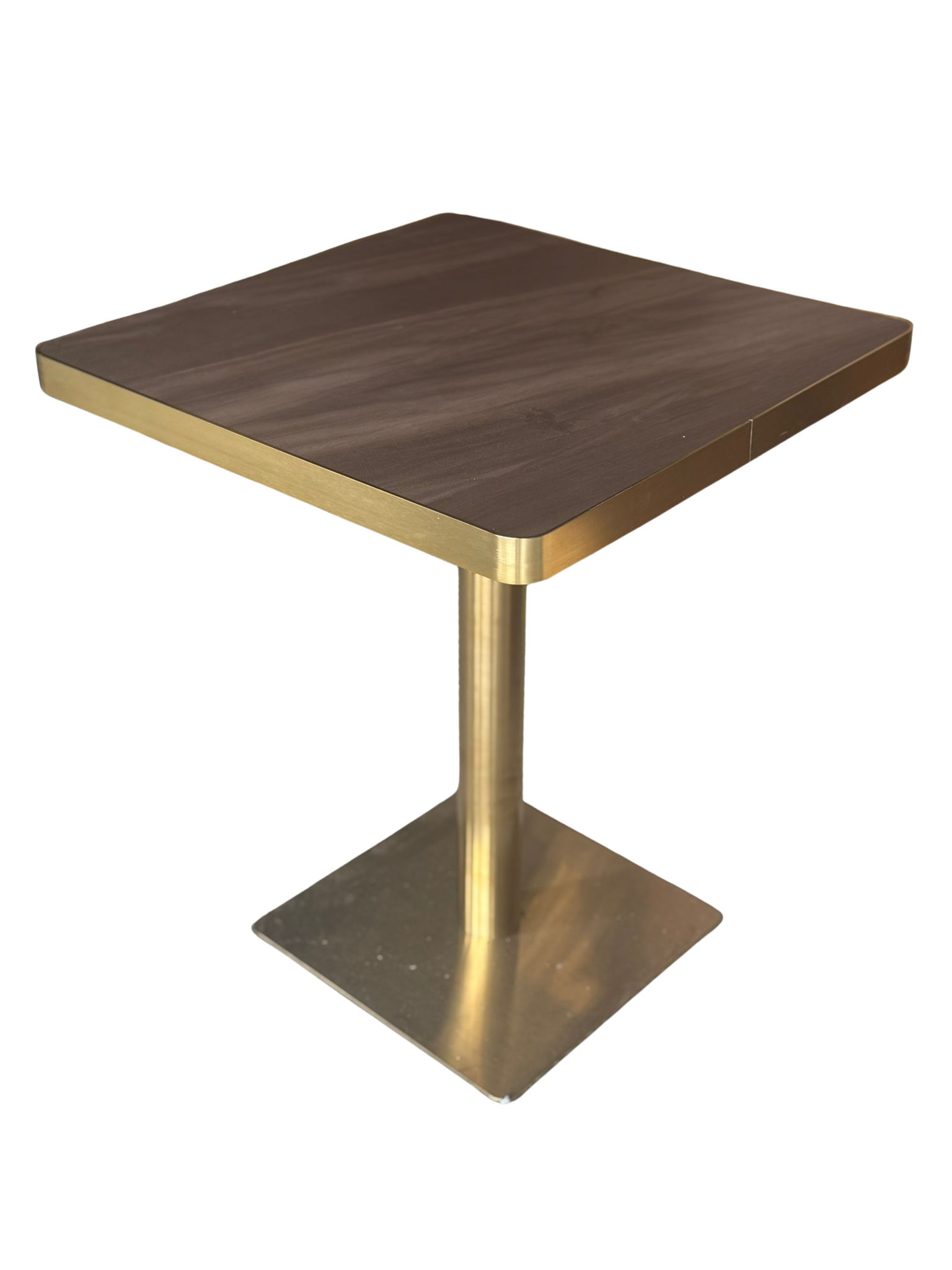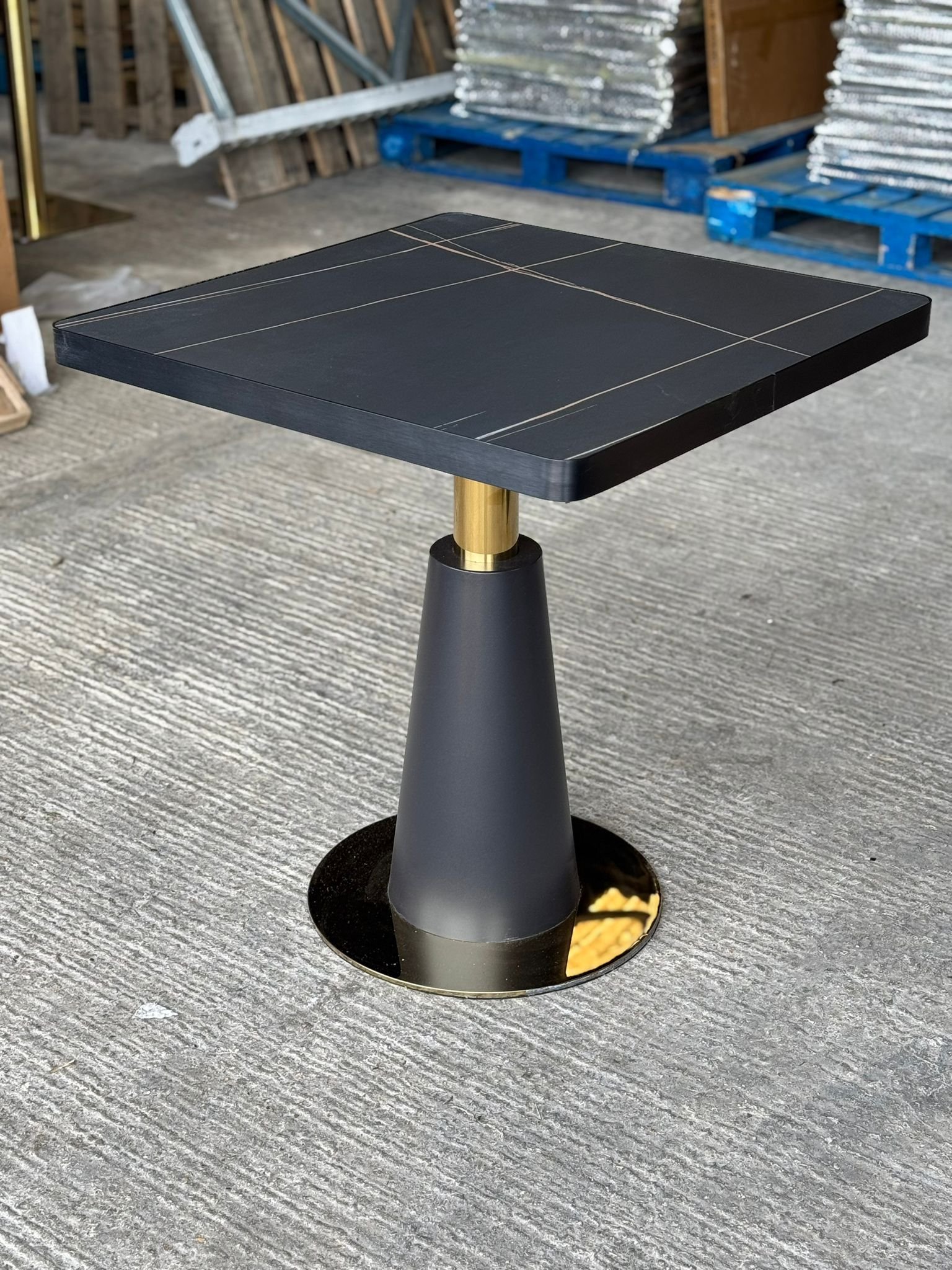
Choosing commercial tables for a restaurant, café or bar? Compare shapes, sizes, tabletop materials & UK pricing. Bespoke, UK-manufactured. Get a quote.
Commercial Tables: A Guide to Types, Sizes & Cost for Restaurants and Bars
The table is the one piece of furniture every guest interacts with directly, for the entire length of their visit — yet it’s often the last thing specified in a fit-out, after chairs, booths and decor are already chosen. Get the sizing or material wrong and it shows up immediately: wobbly bases, cramped place settings, or a tabletop that can’t survive daily wipe-downs.
This guide covers what to look for when specifying commercial tables for a restaurant, café, bar or hotel — shapes, standard sizes, tabletop materials, and what bespoke tables typically cost in the UK.
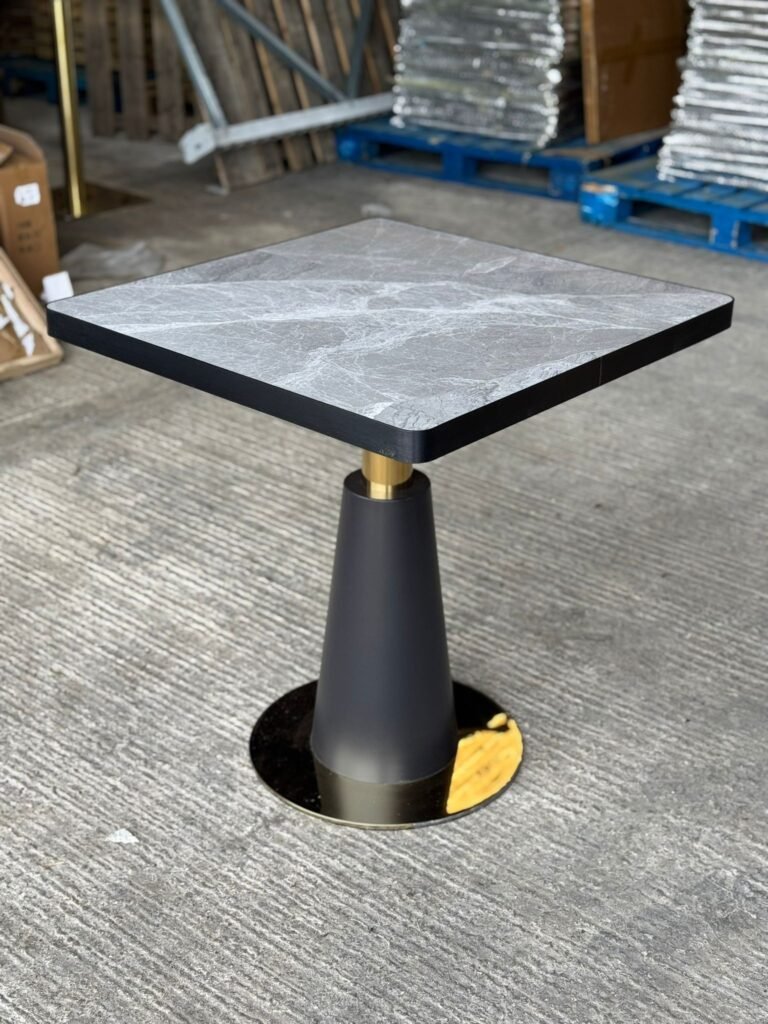
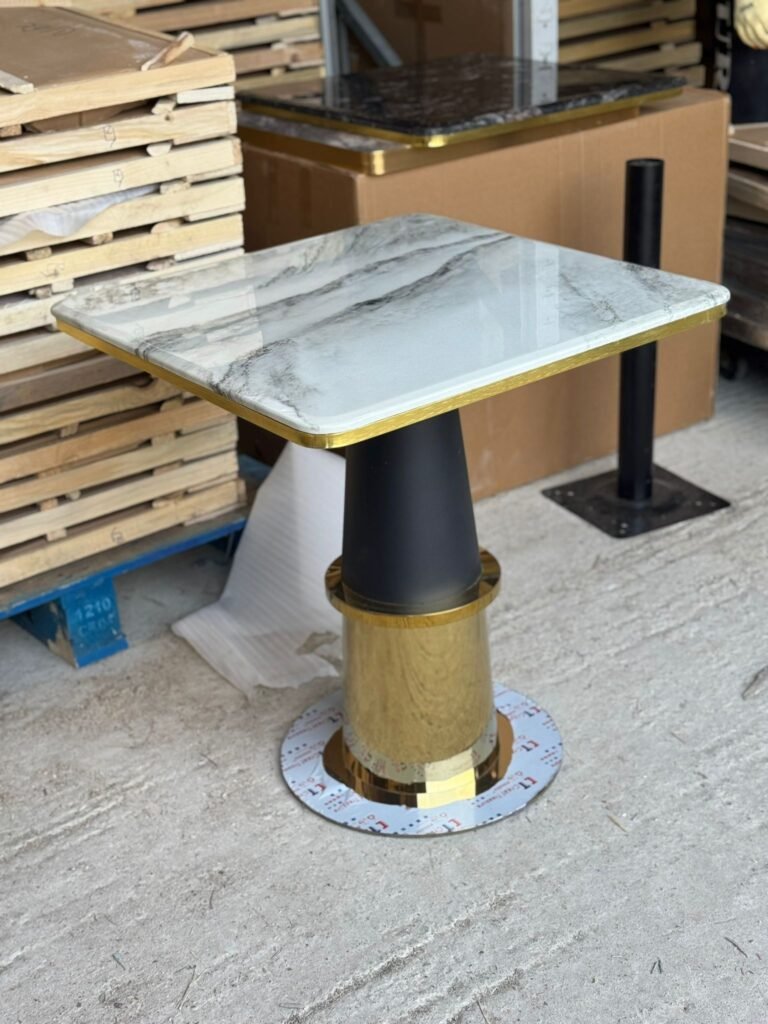
Table Shapes and Where They Work Best
Round tables encourage conversation and make efficient use of tight floor space, since guests can be seated closer together than at a rectangular table of the same capacity. They also pair naturally with booth seating and banquettes.
Square tables are the most flexible shape in a floor plan — easy to push together for larger groups, and efficient for wall-adjacent seating in narrow spaces.
Rectangular tables suit larger group dining, communal tables, and any layout where guests sit along both long edges — common in gastropubs and casual dining.
Bar-height and poseur tables are designed for standing or high-stool seating, typically used in bar areas, waiting zones, or high-footfall spaces where table turnover matters more than lingering.
Booth-paired tables are sized and shaped specifically to sit inside a booth or banquette run, usually fixed or semi-fixed to the floor for stability against guests leaning or pushing.
Standard Commercial Table Dimensions
| Table Type | Typical Size | Seats |
|---|---|---|
| Round café table | 600–700mm diameter | 2 |
| Round dining table | 900–1100mm diameter | 4 |
| Square table | 700 x 700mm | 2–4 |
| Rectangular dining table | 1200 x 700mm | 4–6 |
| Rectangular communal table | 1800–2400mm x 800mm | 8–10 |
| Bar/poseur table | 600–700mm diameter, 1050–1100mm height | 2–4 (standing/stool) |
| Booth table | 600–1200mm length, 400–500mm depth | Matched to booth |
As with all bespoke furniture, these are planning guides rather than fixed rules — the right size depends on your covers target, aisle clearance, and whether tables need to be pushed together for groups.
Tabletop Materials: What Holds Up in Daily Commercial Use
- Laminate — the most practical choice for high-traffic dining, offering strong scratch and heat resistance at a lower cost, in a wide range of finishes including wood-effect.
- Solid wood — a premium, natural look that suits upscale dining, but requires more careful maintenance and periodic resealing to resist water rings and scratching.
- Veneer — gives the appearance of solid wood at a lower cost and lighter weight, though less durable long-term than laminate under heavy commercial use.
- Solid surface (Corian-style) — non-porous, seamless, and easy to repair if scratched or burned — popular in higher-end restaurants and bars.
- Reconstituted stone or terrazzo — extremely durable and increasingly popular for its visual weight and texture, though heavier and pricier than laminate alternatives.
- Outdoor-rated materials (weatherproof laminate, powder-coated metal, HPL) — essential for terraces and beer gardens, where standard indoor tabletops will warp or fade.
Table Bases: Stability Matters More Than It Looks
A tabletop is only as good as its base. Commercial venues typically use:
- Pedestal bases — a single central column, ideal for round tables and easier for guests to sit close without leg interference from four separate legs.
- Four-leg bases — stable and cost-effective, well suited to rectangular and square tables.
- Fixed/floor-mounted bases — bolted to the floor for high-traffic areas or booth-paired tables, preventing movement or tipping under heavy use.
- Folding or stacking bases — useful for function rooms and event spaces that need to reconfigure the floor plan regularly.
Steel and cast iron bases are the standard for commercial-grade stability; lighter aluminium bases suit outdoor or semi-permanent setups where weight matters for repositioning.
What Drives the Cost of Commercial Tables
- Tabletop material — laminate sits at the lower end of cost; solid wood, solid surface, and stone-effect materials increase the price.
- Base type — fixed, floor-mounted bases typically cost more to supply and install than standard four-leg bases.
- Custom sizing and shape — non-standard dimensions or shapes matched to a specific floor plan (e.g. tables built to fit inside a curved booth) involve more fabrication work than stock sizes.
- Order volume — venue-wide table orders benefit from better per-unit pricing than single or small-batch orders.
Because tables are made to order, the most accurate way to budget is a fixed-price quote against your actual floor plan, covers target, and material choice.
Accessibility and Compliance Considerations
Table height and clearance matter for accessibility as well as comfort. Under the Equality Act 2010, commercial venues have a duty to make reasonable adjustments for guests with disabilities — in practical terms, this means ensuring a proportion of tables have sufficient knee clearance and are positioned with adequate turning space for wheelchair users. If any part of your table includes upholstered elements (booth-paired banquette tables, for example), fabric components must still meet Crib 5 fire rating requirements under the Furniture and Furnishings (Fire) (Safety) Regulations. The British Contract Furnishing Association is a useful independent reference for contract furniture standards more broadly.
Frequently Asked Questions
What size table do I need for a 2-person restaurant setting? A round table around 600–700mm in diameter or a square table around 700 x 700mm comfortably seats two, while leaving room for standard place settings.
Should restaurant tables be fixed to the floor? Not always — but in high-traffic areas, booth-paired tables, or venues prone to guests leaning heavily on tables, a fixed base reduces wear, movement, and safety risk over time.
What’s the most durable tabletop material for a busy restaurant? Laminate and solid surface materials generally offer the best balance of durability, heat/scratch resistance, and ease of cleaning for high-traffic commercial use.
Can commercial tables be made to match existing booth seating or chairs? Yes — bespoke tables can be sized and finished to match an existing booth run, chair style, or overall interior scheme, rather than being sourced as a separate, mismatched element.
Get a Bespoke Table Quote
We design and manufacture bespoke commercial tables for restaurants, cafés, bars and hotels across the UK — any shape, size, tabletop material and base finish to match your venue. Browse our Tables gallery for recent installations, or pair your table order with matching chairs, booth seating, or counters for a complete fit-out.
Get a trade quote today.